We provide general advice and support to help community energy groups decide the purpose, scope and network-related considerations for a community battery also known as a neighbourhood battery. We do this through our FAQs, fact sheets and community battery examples.
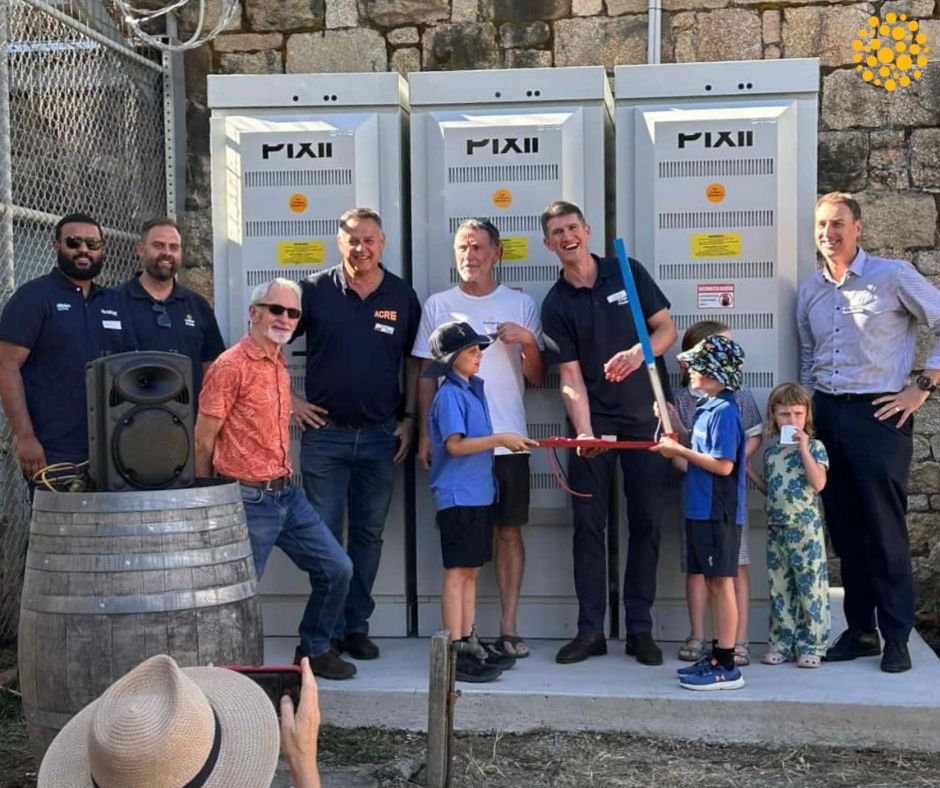
Old Beechworth Gaol community battery launch March 2026. Photo credit: Indigo Power
A range of network data is available on our website to support the feasibility stage of community battery projects.
This includes:
This is a map of our low and medium voltage distribution network with location details of our network assets, such as zone substations.
Select Access your client’s meter data to request meter data on behalf of a third party. This may be relevant if you are considering a behind-the-meter community battery on an existing premises - for example, a council building.
High voltage network data portal
This is a map of our high voltage network (66kV and 22kV) with data, ratings, connections and information from our planning reports, including planned network upgrades, expansions and augmentations.
Visit our Community Batteries webpage.
Email us at communityenergy@ausnetservices.com.au.
After you develop a project scope and select a community-supported location, you can start the connection process with us. Our engineers must provide a technical assessment for the battery connection before we can offer a connection agreement.
Visit Connecting a community battery to see what you need to do to connect a 30kW to 1.5MW community battery.
Community batteries connecting directly to the grid are typically assigned to commercial network tariffs based on their size and usage patterns.
On 1 July 2026, we are introducing a new neighbourhood storage tariff trial for community batteries. The trial will run for five years, until 30 June 2031 and will help us understand how community-scale storage systems, such as community batteries, respond (charge and discharge) to price signals. This information will help us better manage our network.
The tariff structure is designed for community-scale storage systems installed on our low-voltage network. There are two tariffs, based on inverter capacity:
We provide letters of support for community energy groups seeking government or third-party funding. We’ll need your project details, scope and intended benefits.
The letter of support states we are aware of the project and can provide the above listed services and/or what network tariff might apply to the project. We do not carry out any analysis or technical assessments before writing the letter of support.
You can find more information about community batteries, including details of grant funding programs, at: