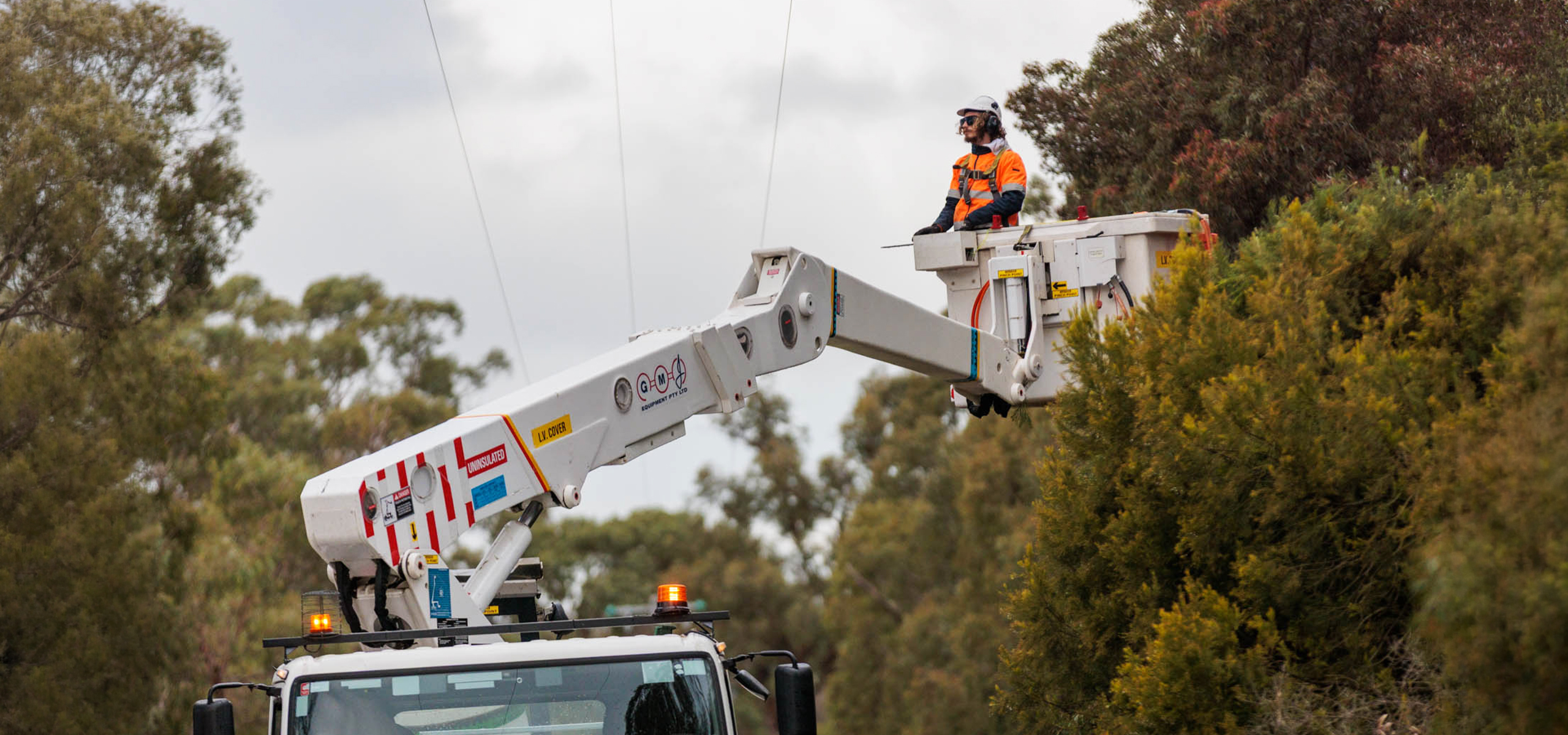
Staying safe around powerlines
Serious injury or death can occur without touching a powerline, which is why it’s important to understand the risks and always stay away from powerlines. This includes both overhead and underground powerlines.
Powerlines carry high voltage electricity and are often live – this means they have electricity flowing through them. Coming too close, touching a line or coming into contact with something that is touching a powerline can cause a severe electric shock or electrocution. Electricity can travel through metal, water, tools, vegetation and the ground.
You don’t need to touch a powerline to be hurt. Electricity can “arc” or jump through the air if a person, tool or piece of equipment gets too close. This can result in serious burns, injuries or death.
Powerlines that are on the ground or damaged may still be live and are extremely dangerous. The surrounding area, nearby fences, vehicles or even the ground itself can become energised. Always stay away from fallen and damaged powerlines and assume they are live.
Touching powerlines can cause sparks or electrical faults that ignite fires, especially in dry or windy conditions. This can put people, property and the wider community at risk.
Examples
Why it’s risky
Examples
Why it’s risky
Examples
Why it’s risky
Examples
Why it’s risky
Examples
Why it’s risky
Examples
Why it’s risky
Examples
Why it’s risky
Examples
Why it’s risky

Before you start any digging or excavation work, visit the Before You Dig Australia website or call 1100.
Check overhead powerlines, safety rules and permits in the Look Up and Live app.
No Go Zones (NGZ) are the safe clearance of overhead and underground electricity assets. The clearance zones are provided in the Table of Clearances (PDF, 24KB). These are minimum distances that must be adhered to for people, equipment and machinery when working near our overhead and underground electricity assets.
Download the Table of clearances (PDF, 24KB)
Only authorised people can work on or near our assets. You must have a Permit to Work or written advice before starting any work. This will be issued in line with the following process and timeframes.
Extec Services manage the NGZ permits on our behalf. You can contact them by email at nogozone@extec.com.au or phone (03) 5941 7333.
Distribution - typical response times
| Process | Approximate timeframe |
|---|---|
| Site visit | 5 business days |
| Permit assessment for: Low Voltage (LV) with no switching High Voltage (HV) for suppression Any works requiring supply interruption |
Can be issued at site visit Minimum 10 business days Minimum 20 business days |
| Typical situations such as supply shutdowns/isolations | Up to 5 weeks, requires 18 business days for Network Operations |
| Protective warning methods such as fitting of tiger tails or insulating mats | Up to 5 weeks for the management and completion of requests |
| Visual warning protections, including No Go Zone flagging, warning signs | Up to 5 weeks for the management and completion of requests |
Before working in NGZ around our transmission assets, you'll need approval from our Line Assets Easements Group. They can also help you get written authorisation, which may include a Permit to Work. You can contact them by email at PTW@ausnetservices.com.au or phone 1300 360 795 (Monday - Friday, 8am - 5pm).
For more information about working near powerlines, visit Energy Safe Australia.
There are costs involved with work conducted in NGZ around distribution assets. These costs help cover hazard warning and safety services.
All costs are subject to variation and depend on case-by-case work requirements.
These costs don't include extra services, for example traffic management services, Council or VicRoads permits.
| Service type | Minimum charge |
|---|---|
| Supply shutdown of network (covers) | $5000 |
| Isolation of services | $3000 |
| Hold electrical power poles | $6000 |
| Safety observer | $1500 |
| Service type | Minimum charge |
|---|---|
| Installation of tiger tails (covers) | $2500 |
| Installation of flagging | $4000 |